
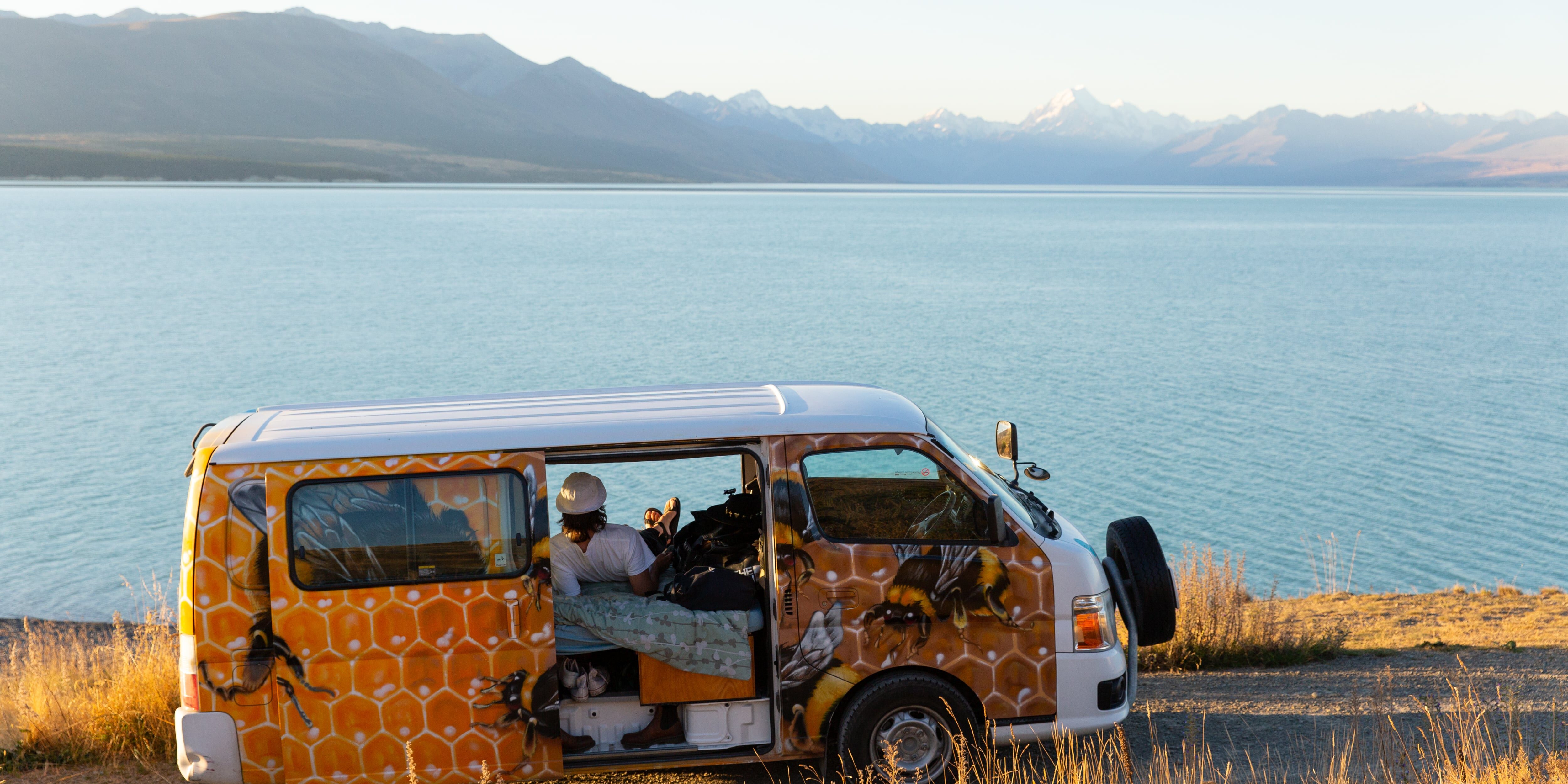
A multi-week New Zealand road trip means your campervan needs to pull double duty. It has to handle winding kiwi roads with ease while giving you a comfortable place to cook, sleep, and unwind every night.
If you’re coming in from overseas, you’ll want complete confidence in your setup before you arrive. Here’s what to look for before you book to make sure life on the road is as easy as possible.
Choosing your van: What matters most for travelling around New Zealand?
Campervan travel in New Zealand may feel familiar if you’ve toured the UK, but the distances, roads and camping rules can be quite different, and change what you need from your van.
The right balance of size and comfort
New Zealand’s roads tend to be narrower and more winding, especially in rural and mountainous areas, so the right van size can make a real difference to how easy your trip feels, particularly when you’re covering long distances.
We’d recommend choosing a van that’s compact enough to manoeuvre easily, but still comfortable enough to live in for several weeks. Larger motorhomes are great if you want the maximum amount of space, but they’re trickier to park in tight town centres, less forgiving on single-lane bridges, and harder to drive on winding coastal and mountain roads.
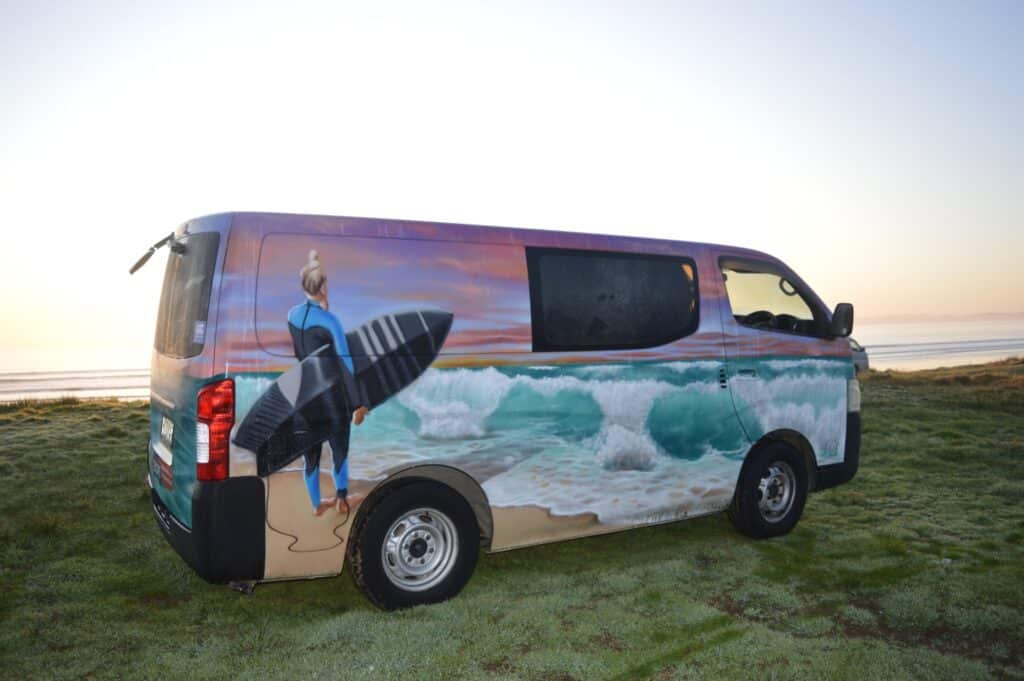
A compact Escape campervan parked up by the New Zealand coast.
Deciding whether to go self-contained
Whether your campervan is certified self-contained can affect where you’re able to stay overnight.
Certified self-contained campervans
Best for: Travellers who want more flexibility on where they sleep, along with the comfort of an onboard private toilet.
If you plan to pull up and park outside of a traditional holiday park or campground (freedom camp), you’ll need a certified self-contained van. These vans have permanently fixed toilets and onboard waste tanks, which are key requirements for certified self-containment and allow you to use many freedom camping areas around New Zealand.
But using a self-contained van doesn’t mean you have to rough it. You can still stay in fully equipped holiday parks whenever you want powered sites, hot showers, and laundry facilities.
Why choose self-contained?
- Everyday convenience: Having your own private toilet means you’re less dependent on public amenities – a massive bonus on long drives, in remote areas, or late at night.
- Flexibility: Mix and match free, scenic public spots with fully equipped holiday parks as you go.
Important note: Using a self-contained van doesn’t mean you can camp anywhere. Local freedom camping rules still apply, so always check the rules for the area before settling in for the night. Freedom camping in a non-certified vehicle or outside designated areas carries instant fines.
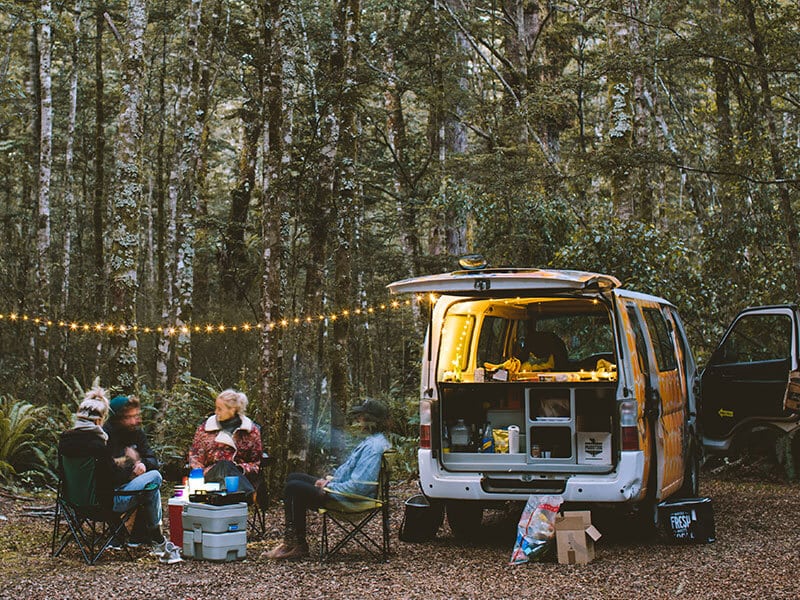
Setting up camp for the night in the New Zealand bush.
Non Self-Contained
Best for: Travellers who want a simple, comfortable setup and plan to stay at holiday parks or campgrounds with facilities.
Standard camping vans that aren’t certified self-contained typically have a simpler set up, but that doesn’t mean sacrificing comfort. You’ll still have the essentials for sleeping, cooking and relaxing on the road – just without an onboard toilet or waste system to manage.
Since you can’t legally freedom camp in this type of van, you’ll need to plan your overnight stops a little more carefully. If you’re happy using holiday parks and campgrounds with toilets and other facilities, that may not be much of a compromise at all. There are thousands of options around New Zealand, so you won’t be short of places to stay.
Why choose a non-self contained van?
- Lower Rental Costs: You’ll typically pay less upfront for the vehicle hire, freeing up more of your budget for activities and food.
- Easy, no-fuss living: No onboard toilets or waste systems to deal with! One less thing to worry about on a long journey.
Campervan features to check for
Beyond having enough space to sleep and travel comfortably, a few practical features can make a big difference over a longer trip, both to your day-to-day comfort and what you end up spending along the way.
✓ Off-grid power
If you’re planning to stay at unpowered sites, a secondary battery can keep things like your fridge, lights and USB charging running.
✓ Fridge or cool box?
Not every NZ campervan comes with a fridge. Some more basic vans provide a cool box instead (or a chilly bin, as we call it in NZ). That can be perfectly adequate for shorter trips, but for several weeks on the road, a fridge can be worth paying extra for.
✓ Cooking equipment
Most NZ rental campervans come with basic cooking equipment, but check exactly what’s included before you book. Some rental companies may charge extra for kitchen or living kits.
✓ Included Bedding
Check whether bedding is included or needs to be hired separately. Having sheets, pillows and a duvet ready to go also means one less bulky thing to pack or organise for a long-haul flight.
✓ Snow chains for winter trips
If your winter itinerary takes you into alpine areas, particularly in the South Island, check whether snow chains are included or available to hire. They’re not needed everywhere in New Zealand, but may be required on certain mountain roads when there’s snow or ice.
*All escape campervans come with plenty of storage, cooking equipment essentials (gas cooker, sink with running water, cutlery, crockery, pots, pans), a Queen sized bed and dry-cleaned bedding, and free snow chains. Our Self-Contained vans come with a fridge and a secondary battery for off-grid power.
Comparing your options
Once you’ve worked out which features matter most for your trip, you can start comparing campervans based on what you’ll actually use. You don’t need the top-of-the-line model if you’re not going to touch half the features. The right pick really comes down to how long you’re on the road, where you’re parking up, and how much comfort you want along the way.
Escape’s campervan rentals
Escape has three compact campervan options, each set up a little differently depending on how you want to travel. All include the essentials for life on the road. The main differences come down to capacity, self-containment and a few extra onboard comforts.
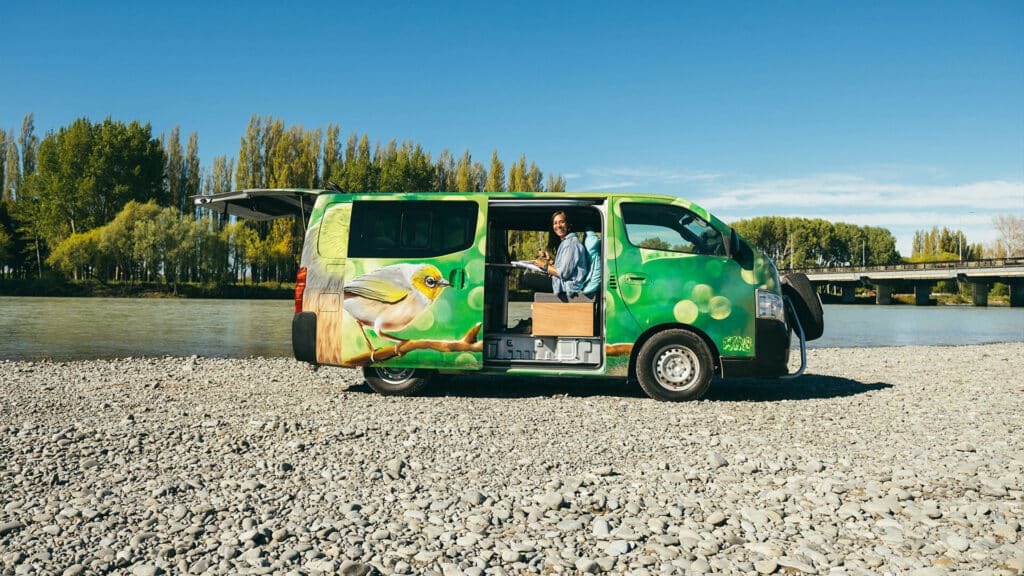
An Escape campervan parked up on the coast, fully equipped for life on the road.
| Standard | Self-Contained | Self-Contained PLUS | |
|---|---|---|---|
| Best for | Budget-conscious trips | Flexibility on the road | Extra comfort on longer trips |
| Sleeps | Up to 3 | 2 | 2 |
| Self-contained | No | Yes | Yes |
| Toilet | No | Yes | Yes |
| Fridge | No | No | Yes |
| Power off-grid | Limited | Limited | Yes, secondary battery |
| Cost | $ Lowest | $$ Mid range | $$$ Highest |
💡 Our pick for longer trips. All three options can work well for ePreview (opens in a new tab)xtended travel, but Self-Contained PLUS is our pick for extra comfort, with a fridge, fixed toilet and secondary battery making life on the road that little bit easier.
Need extras?
Not essential, but a few optional extras can add to the experience of your trip.
At Escape, we’ve got various accessories you can add on to your booking, including a picnic table, portable BBQ, two-person tent and more.
Ready to pick your van?
Have an idea of what you’re looking for? Head over to our full campervan lineup to compare models, see what’s included in each setup, and check availability for your travel dates.