

Dreaming of a New Zealand escape? A Kiwi campervan trip is hard to beat, but there’s plenty to think about when you’re making the trip all the way from the UK.
To save you hours of research, we’ve put together a practical guide covering the big decisions you’ll need to make, from when to go to finding the right campervan.
When to visit
There’s really no bad time for a New Zealand road trip, but when you visit will make a difference to the crowds, campervan availability and overall pace of your holiday.
The seasons down here are the reverse of the UK, with summer running from December to February.
- Late December-January: Peak season. Campervans and popular campsites can book up quickly, so it pays to get organised early.
- February: Still busy, but domestic holiday demand starts easing.
- March–April: A good shoulder-season option, with fewer crowds while conditions are often still suitable for campervan travel.
February to April is generally a great sweet spot, combining generally pleasant weather with fewer crowds as you move into autumn.
This section will link to the new ‘When to visit New Zealand’ blog once created and published.
Where to go
When it comes to mapping out your itinerary, the big decision is whether to focus on the North Island, the South Island, or both.
New Zealand packs two completely different worlds into one country. In the North Island, it’s all about warmer coastal beaches, geothermal hotspots and volcanic landscapes. Head to the South Island and the scenery turns massive with towering alpine ranges, deep fiords, and glacial lakes.
Where you focus will ultimately come down to the vibe you’re after and how much time you have.
Here’s a taste of what each island has to offer:
North Island highlights:
- Coromandel: Cathedral Cove and Hot Water Beach
- Geothermal & Lakes: Rotorua and Lake Taupō
- Culture & Icons: The Hobbiton Movie Set
- Far North: The coastal views and marine life of the Bay of Islands
- City Stops: Auckland and Wellington
South Island highlights:
- Fiordland: Milford Sound and Doubtful Sound
- Alpine & Glaciers: Aoraki / Mount Cook, Franz Josef, and Fox Glaciers
- Scenic Lakes: Lake Tekapo and Lake Wānaka
- Adventure Hub: Queenstown

How long do you need?
Many travellers coming all the way from the UK choose to tackle both islands in one trip.
Both islands are certainly well worth exploring if you have the time. You can take a campervan between the North and South Islands on the Cook Strait ferry (running between Wellington and Picton) to connect the two. The ferry ride is a simple trip and takes roughly 3 and a half hours (depending on weather).
To avoid trying to squeeze too much in, use these timeframes as a rough guide:
- 3–4 weeks (Ideal for both islands): Gives you enough breathing room to slow down and enjoy the journey rather than spending your entire trip behind the wheel.
- 1–2 weeks (Focus on one island): If you’re short on time, picking one island and doing it justice is the way to go.
Check out our itineraries for popular New Zealand destinations to get a feel for what you can comfortably fit into your trip.
Choosing the right campervan
The type of campervan you choose can affect where you’re able to stay overnight in New Zealand.
If you plan to freedom camp (stay overnight in permitted areas outside established campsites and holiday parks), you’ll generally need a certified self-contained campervan. These vans have facilities for managing your own water and waste, including a fixed toilet.
Note: Being self-contained doesn’t mean you can park anywhere. Local freedom camping rules still apply, so always check where overnight stays are permitted. Camping in a prohibited area can result in a fine.
Finding the right fit
Once you know whether you need a self-contained campervan, it’s time for the fun part: choosing your home on the road.
We’ve got a few options available at Escape, depending on how many people you’re travelling with and the features you want on the road.
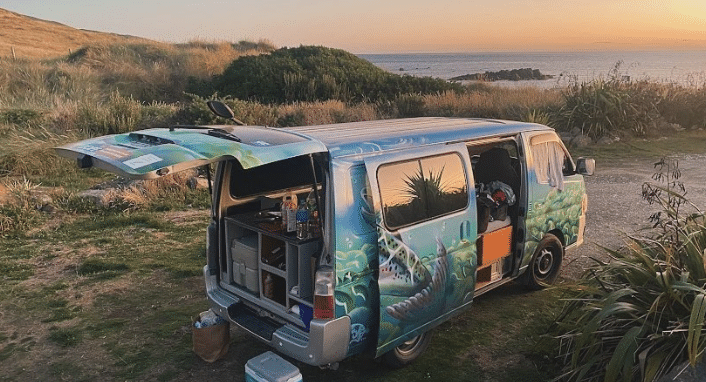
Travelling solo or as a couple? Our Self-Contained and Self-Contained Plus campervans sleep two adults and give you more flexibility over where you can stay. The Plus also includes a fridge and power plugs.
Travelling with two or three people? Our Standard campervan sleeps up to three adults and offers more space, making it a good option if you’re planning to stay at campsites and holiday parks with facilities.
All Escape campervans come with a full queen-size bed and bedding, cooking equipment, a sink with running water, and plenty of storage.
What costs to expect and plan for
Travelling by campervan can be a more affordable way to see more of New Zealand, with your transport and accommodation rolled into one and the option to cook your own meals along the way. But small expenses can still add up quickly.
Day-to-day costs:
- Campsites: New Zealand has plenty of free and low-cost camping options, alongside DOC campsites and holiday parks.
- Food: Supermarket shopping in NZ is somewhat pricier than in the UK, although it varies considerably by product. We’d recommend stocking up at larger supermarkets before heading to isolated towns or tourist hotspots.
- Fuel: Petrol stations can be few and far between on some remote New Zealand routes, so fill up before longer drives rather than waiting until you’re running low. Fuel can also cost more in remote areas, and apps like Gaspy can help you compare prices along the way.
The good news is that many of the experiences you’ve come to New Zealand for don’t cost a thing. Beaches, mountain views, scenic stops and walking tracks are yours to explore without adding to the budget.
Campervan costs:
- Campervan hire: Rates change with the season, with summer generally the busiest period. If your dates are flexible, compare peak and shoulder-season rates before deciding when to travel.
→ Explore Escape’s campervan costs.
- Insurance: Standard insurance is included in Escape’s campervan rental rate, so there’s no need to arrange it separately. You can choose to upgrade your cover to reduce how much you could be liable for if the campervan is damaged.
→ Explore Escape’s insurance options.
Booking the key parts of your trip
Travel documents & requirements
Along with your passport and usual travel documents, there are a few New Zealand-specific requirements you’ll need to sort before your trip:
- NZeTA: If you’re travelling on a UK passport, you’ll generally need a New Zealand Electronic Travel Authority (NZeTA) before travelling to New Zealand and will also need to pay the International Visitor Conservation and Tourism Levy (IVL).
- UK driving licence: You can generally drive in New Zealand on a current, valid UK driving licence. Learn more about driving with an overseas licence here.
- New Zealand Traveller Declaration: You’ll need to complete a declaration before entering New Zealand. If you’re flying, you can submit it from 24 hours before you start your journey to New Zealand.
Entry and driving requirements can change, so check the latest information from Immigration New Zealand and NZTA before you travel.
Flights and campervan hire
For most campervan trips, Auckland and Christchurch are the easiest places to start. Auckland puts you in a good spot for exploring the North Island, while Christchurch is a great jumping-off point for the South Island.
Escape has campervan depots in both Auckland and Christchurch, and you can pick up in one city and drop off in the other. If you’re travelling both islands, flying into one and home from the other can save you a fair bit of backtracking.
A couple tips before you start booking:
- Get in early if you’re travelling over summer. Campervans and popular campsites can fill up around Christmas and January, so if your dates are locked in, it pays to book ahead.
- Give yourself a night to recover after the flight. It’s a long haul from the UK, so consider staying in a hostel or hotel before picking up your campervan. You’ll be much fresher when it’s time to get behind the wheel.
Campsites and overnight stays
You don’t need to book every night of your campervan trip before leaving the UK. Part of the fun is having the flexibility to change your plans, stay somewhere longer or take a different route.
It does pay to book ahead for popular destinations and busy travel periods, particularly over summer. Lock in the campsites that matter most to your itinerary, then consider leaving some nights flexible as you travel.
There are thousands of campsites across New Zealand, from holiday parks with showers, toilets and powered sites to more basic DOC and independent campsites, so you’ll have plenty of choice along the way.
We’d recommend using apps like CamperMate to find campsites, check facilities and plan your overnight stops while you’re on the road.

A few things to know before you go
Before you start locking in dates and mapping out your route, there are a few things about travelling in New Zealand that are worth knowing. They can affect what you pack, what you bring into the country and how you plan your time on the road.
Be prepared for changeable weather
New Zealand weather can change quickly, particularly around the coast and in alpine areas, so pack for a few different conditions even if you’re visiting in summer. Layers, a warm top and a waterproof jacket are always handy, and it’s worth checking the forecast on MetService before heading off each day.
The New Zealand sun can also be stronger than you’re used to, so pack sunscreen (SPF of 30+ or 50+), sunglasses and a hat and keep them handy for days spent outdoors.
New Zealand has strict biosecurity rules
New Zealand takes biosecurity seriously, so you’ll need to declare certain food, plant and animal products, as well as used outdoor equipment that could be carrying soil, seeds or pests.
If you’re bringing hiking boots, camping equipment or other outdoor gear, give it a good clean before you travel, removing any soil, mud, seeds or plant material. If you’re unsure whether something needs to be declared when you arrive, declare it and let the border staff check.
Driving on New Zealand roads
Driving in New Zealand will feel familiar in some ways. Like in the UK, you drive on the left, and you’ll recognise many of the road signs, markings and roundabouts. There are still some important differences in the road rules and driving conditions, though.
The bigger adjustment is the roads themselves. Outside the main cities, they can be narrower, hillier and more winding than you might expect. You’ll also come across one-lane bridges and some unsealed roads, so allow more time for journeys than the distance on the map might suggest.
Before you set off, take some time to familiarise yourself with the rules of the road on DriveSafe.
Start planning your New Zealand road trip
A New Zealand campervan trip doesn’t need to be planned down to the last stop. Work out your dates, the places you really want to see and how much time you have, then leave some room for the unexpected along the way.
When you’re ready to book, explore Escape’s campervan rental options to find the right fit for your trip. Remember to get in early if you’re travelling in peak season!