
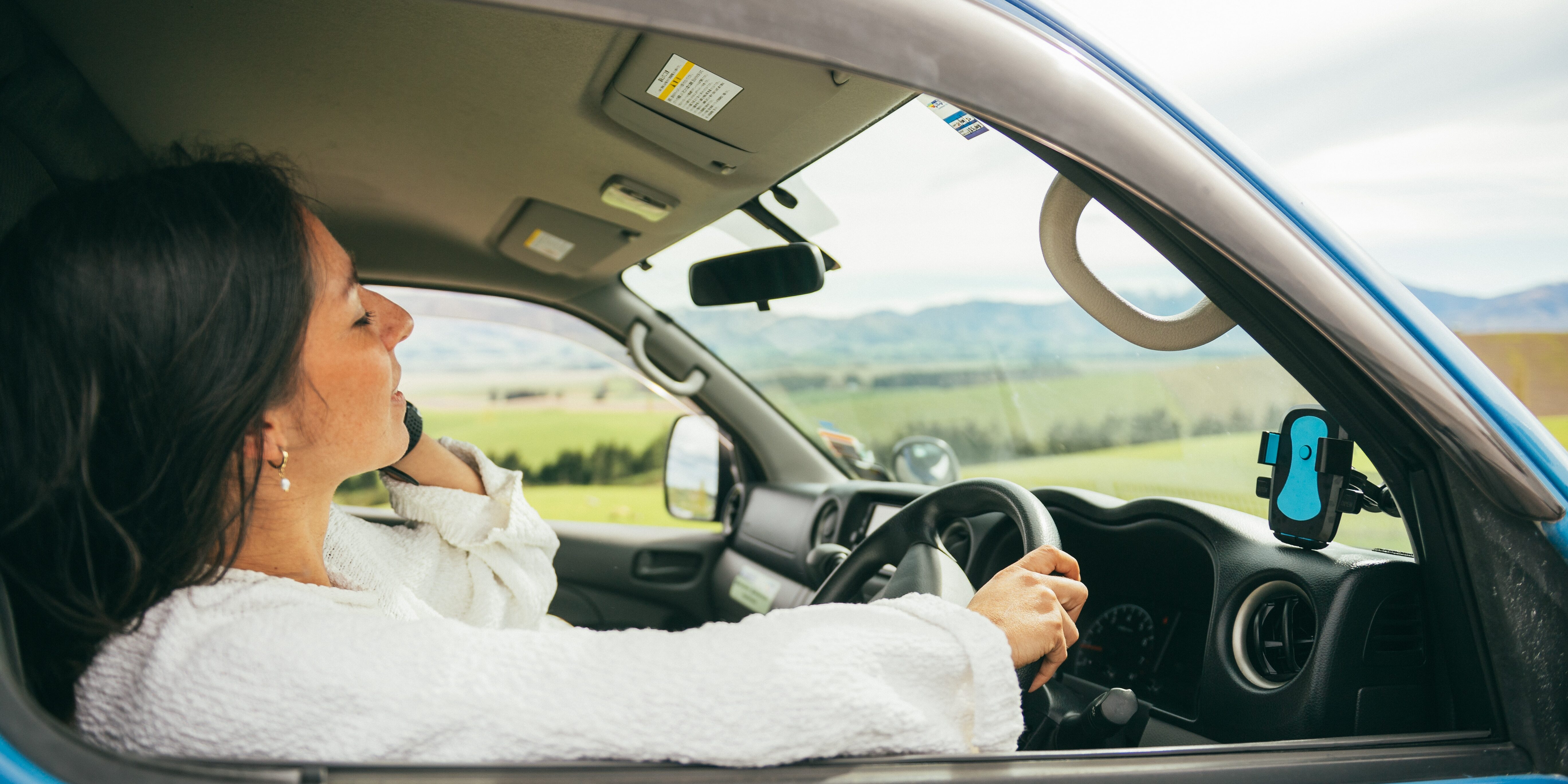
New Zealand was built for road trips, but for those coming from overseas, our road network has a few quirks to be mindful of.
Here’s what you need to know to get behind the wheel safely and make the most of your trip.
Before you start driving
First off, you’ll need to check that your driver’s licence meets New Zealand requirements before you pick up your campervan.
Licences that aren’t in English must be accompanied by an accurate English translation or an International Driving Permit (IDP).
For the full requirements, check our guide to driving in New Zealand with an overseas licence.
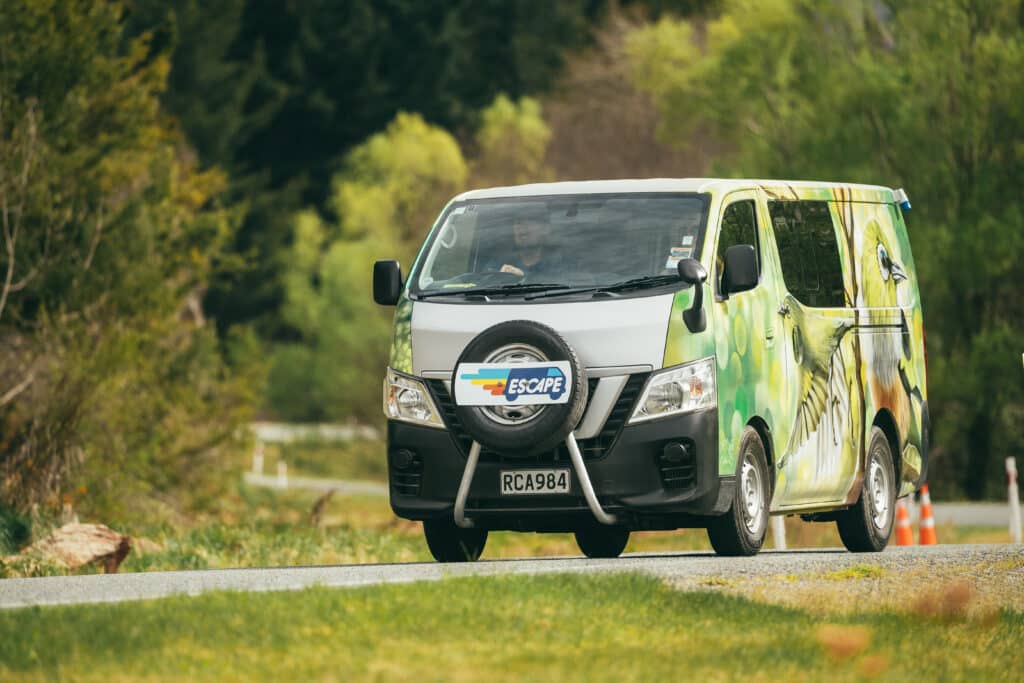
An Escape campervan driving on the New Zealand roads.
What is driving in New Zealand really like?
Driving in New Zealand is simple enough once you get the hang of it. We drive on the left side of the road here. Beyond that, the biggest adjustments come down to the terrain and road network itself:
- Motorways are mostly around the larger cities. Once you’re out of town, expect plenty of two-way roads with one lane in each direction.
- Rural roads can be narrow, winding and steep, particularly in hilly or mountainous areas.
- Most main routes are sealed, but you may come across unsealed gravel roads in more remote areas.
- One-lane bridges are common on some routes, with signs showing who needs to give way.
- A short-looking stretch on the map can take longer than you expect, so don’t judge driving time by distance alone. Leave plenty of time and take regular breaks.
Driving a car vs campervan
Exploring New Zealand by campervan is one of the best ways to see all this beautiful country has to offer. For many though, driving a campervan for the first time can be a bit intimidating, especially in a foreign country where you may be unfamiliar with the road rules.
But if you’re picturing a massive American-style RV, don’t worry. Campervans in New Zealand come in all shapes and sizes, from compact converted vans to large multi-birth motorhomes.
For a long-haul NZ road trip where you’ll be covering a lot of ground, we’d recommend choosing a van that can handle narrower highways, windy mountain passes, and tight parking spots without making every drive feel like hard work.
Escape’s campervans sit at the smaller end. If you’re used to driving a normal car, a compact campervan like this shouldn’t feel completely unfamiliar. But even a smaller campervan is bigger and heavier than many standard cars, so you’ll need to allow for its size when driving and parking.
Always make sure to:
- Watch your height. Low branches and overhead structures can still catch out drivers, even in a compact campervan.
- Allow a little more room when turning to avoid scraping the sides of your van.
- Take extra care when parking and reversing. This is where most campervan damage occurs.
Campervan parking rules
Parking your campervan during the day
You don’t generally need to find a special campervan park just to stop and explore during the day. If your campervan fits safely within the space and there are no signs or restrictions preventing you from parking there, you can generally use a regular parking space.
Overnight stays
For an overnight stop, you’ve generally got a few options:
- Holiday parks and campgrounds: Usually the easiest option, with designated sites and facilities such as toilets, showers, kitchens and powered sites depending on the campground.
- DOC campsites: The Department of Conservation manages campsites across New Zealand, from basic sites in remote areas to serviced campgrounds.
- Freedom camping: You can freedom camp in some places, but not everywhere. Where you can stay depends on the land, local council rules and whether your campervan meets current self-containment requirements. You’ll also need a certified self-contained campervan to stay overnight on most public and council-controlled land.
For more information on these rules, read our guide to freedom camping in New Zealand.
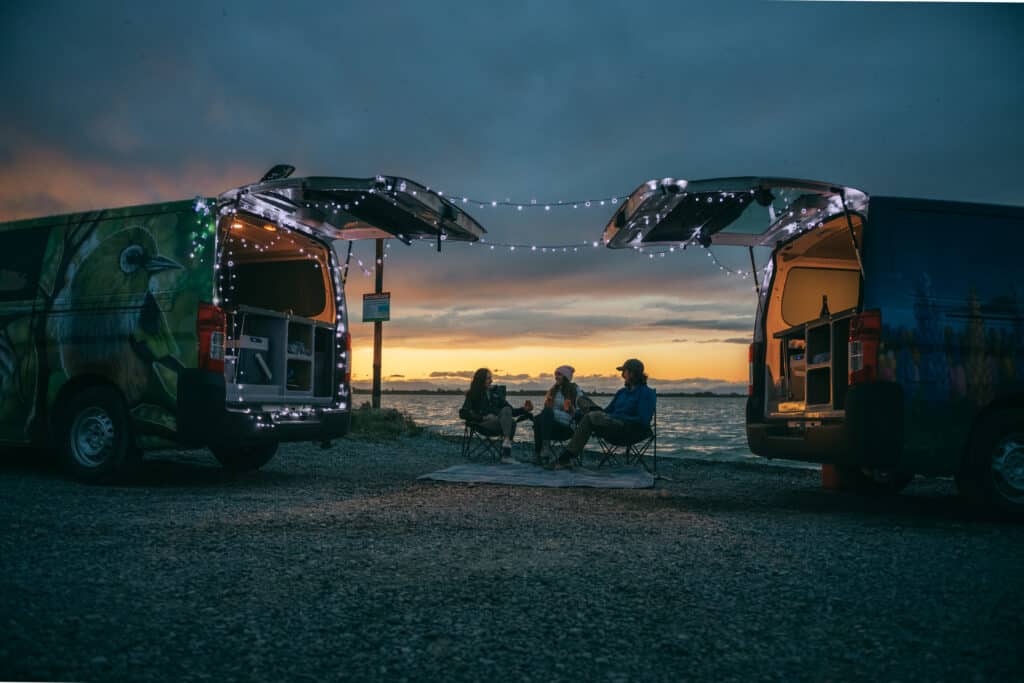
Settling in for the night at a beach campsite.
Driving to the conditions
New Zealand’s weather can change quickly, particularly around alpine and mountainous areas, so conditions may look very different from when you first set off.
Before heading out, check the weather and the NZTA Journey Planner for road conditions, closures and delays. If you run into heavy rain, fog, snow or ice, slow down, leave more space between you and the vehicle ahead and use your headlights when visibility is poor.
Travelling in winter? Snow and ice can affect mountain passes and other higher roads. Escape provides snow chains free of charge, so make sure you know how to fit them before setting off into areas where snow is forecast. Always follow road signs and instructions requiring chains or indicating that a road is closed.
For a full seasonal breakdown, check out our guide on when to visit NZ.
What to do if something goes wrong on the road
Breakdowns and accidents can happen, but you won’t be left to figure things out on your own.
If your campervan breaks down, pull over somewhere safe, switch on your hazard lights and call NZ Roadside Assistance on 0508 697 623. Escape includes 24/7 roadside assistance with every campervan hire, so we can arrange the help you need.
If you’re involved in an accident, stop and make sure everyone is okay. If anyone is injured or there’s an emergency, call 111 for Police, Fire or Ambulance. Exchange details with anyone else involved, record what happened and contact Escape as soon as you can.
Your insurance cover will depend on the option you selected when hiring your campervan. It’s worth knowing what’s covered before you hit the road. You can explore Escape’s insurance options here.
Haven’t rented your campervan yet?
Still in the midst of planning?
If you’re looking for something compact, comfortable and easy to take around New Zealand, we have a range of self-contained and standard campervans to choose from.
Compare our campervans to find a model suited to your travel needs.