

Our 7-day South Island itinerary takes you from Christchurch to sunny Nelson, with a couple of days to soak up the beauty of Abel Tasman and Golden Bay.
We’ve provided two routes – an inland alpine route and a scenic west coast route – that converge in Motueka on Day 4.
Pick the path that suits your vibe, or do both if you’re staying for longer! 🚐☀️
Click the links to check out the trips on Google Maps with the campsites locked in!
Either way, you’ll experience Aotearoa’s breathtaking landscapes, friendly locals, and beautiful wildlife – all from your reliable Escape Rentals campervan.
Start with a campervan quote for your dates, then keep reading to map out the road trip of a lifetime.
- Option 1: Inland Alpine Route – Christchurch to Nelson
- Option 2: West Coast Route – Christchurch to Nelson
- Days 5–7: Abel Tasman, Golden Bay, and Nelson
- Practical Tips for Campervan Travel in New Zealand
- Where Next? Continue the Adventure or Head Home
Option 1: Inland Alpine Route – Christchurch to Nelson
This route takes you from Christchurch to Nelson, via Lake Tekapo, Aoraki/Mt Cook, Lake Pukaki, Hanmer Springs, and Abel Tasman.
Perfect if you love high country scenery, turquoise lakes, and alpine adventures.
Day 1: Christchurch to Lake Tekapo – 250 km, ~3.5 hours
Morning: Collect your campervan from the Escape Rentals depot. Next, head to PAK’nSAVE Moorhouse and bulk up on great-value groceries, toiletries, and supplies.
⛽ Money-saving tip: Hang onto your receipt for fuel discounts at their associated petrol stations!
Today, you’ll head southwest via SH1 and SH73 to the turquoise Lake Tekapo and the breathtaking Southern Alps.
If you feel like a break from driving, stop by the Peel Forest Park Scenic Reserve and go for a beautiful walk. Choose:
- The Big Tree Walk (15 minutes) to see a 1000-year-old tōtara tree
- The Acland Falls Track (30 min return) through lush bush to a waterfall
Lunch: Stop at the Fairlie Bakehouse and try the pork belly & apple or the bacon & salmon pies. They’re Kiwi legends – cheap, quick, and delicious.
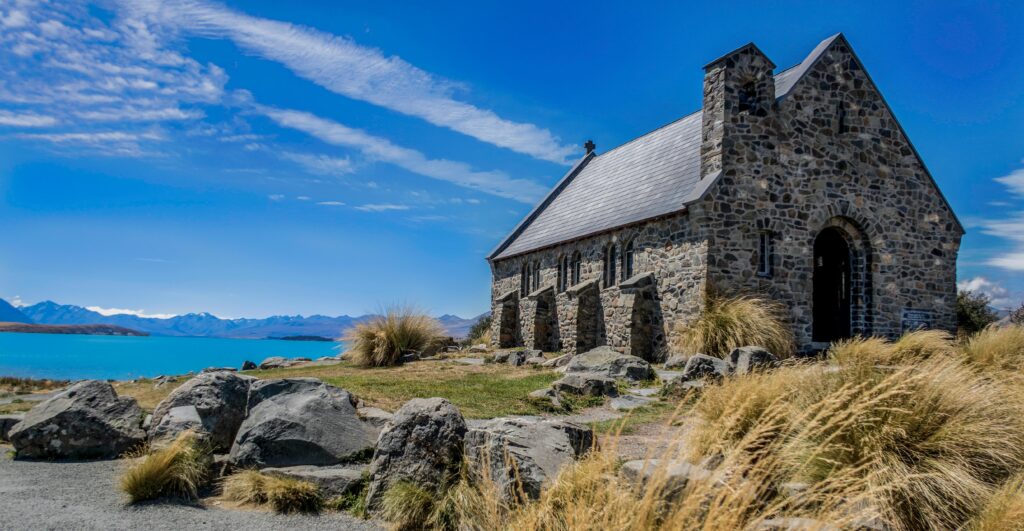
Afternoon: Arrive in Lake Tekapo, a dazzling alpine lake at the foot of the Southern Alps. Its unreal turquoise colour comes from fine rock particles, known as “glacial flour”, suspended in the water reflecting sunlight.
Spend the rest of the day enjoying:
- Church of the Good Shepherd: Visit this lakeshore church, one of NZ’s most photographed spots. Take a few shots of your own with this picture-perfect backdrop!
- Mt John Observatory Track: Head to the Mt John Observatory above Lake Tekapō by foot or campervan for 360° views of the lake and mountains.
- Tekapō Springs: Relax in the Tekapō Springs hot pools with lake and alpine views. If you’re brave and want to save a few dollars, take a refreshing (to say the least 🥶) dip in the glacial lake.
- Stargazing: Tekapo is part of a UNESCO Dark Sky Reserve, so marvel at the Milky Way for free.
Where to Stay: Pick the Lake’s Edge Holiday Park in Tekapo for a powered site, or opt for a free lakeside campsite at Lake Pukaki just 30 minutes down the road if you’re self-contained.
🔭Local Tip: Māori used the stars for navigation and storytelling – see if you can spot the Southern Cross or Matariki cluster.
Day 2: Lake Tekapo to Lake Pukaki (via Aoraki/Mt Cook) – 150 km, ~1.5 hours
Morning: Drive towards Aoraki/Mt Cook National Park, following the shore of Lake Pukaki to Mt Cook Village– the trip is short if you’re already freedom camping by Lake Pukaki.
Pull over at Peter’s Lookout for a marvellous view of the mirror-like lake and Aoraki/Mt Cook. In Māori lore, Aoraki is a sacred ancestor, and from this point, you’ll understand why!
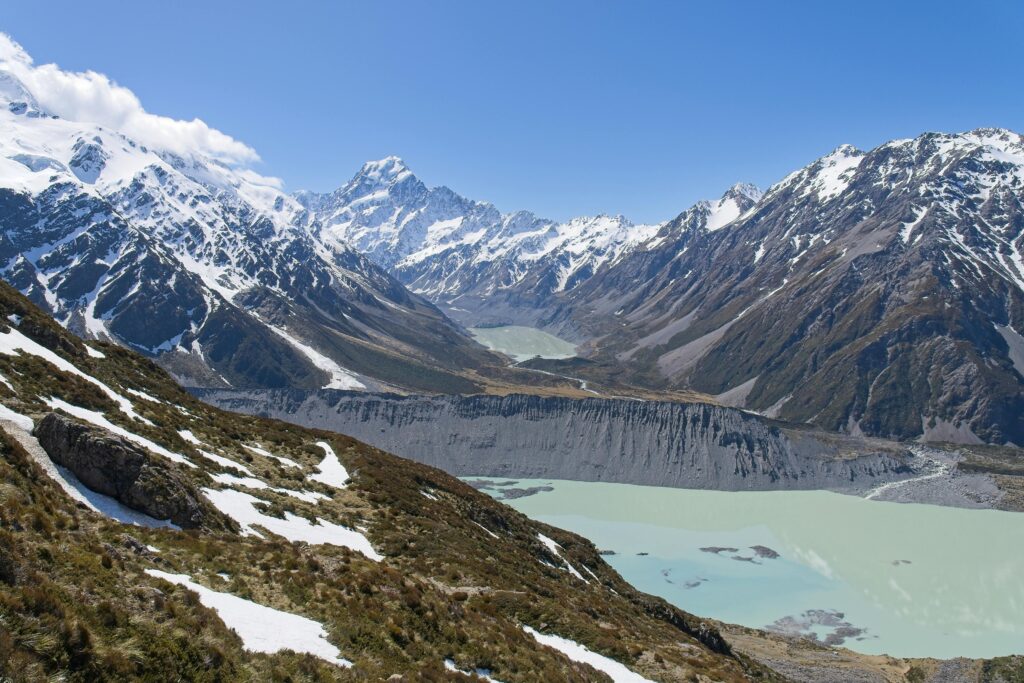
Late Morning/Midday: Lace up your hiking boots for the Hooker Valley Track, one of NZ’s most iconic day hikes.
It’s a mostly flat 10 km return (~3 hours) on a well-formed trail – easy as. The walk winds through the valley, crossing three swing bridges over the Hooker River, and ends at the iceberg-dotted Hooker Lake.
The views of Aoraki, NZ’s tallest mountain at 3,724 m, are unbelievable.
Afternoon: Back in Mt Cook Village, grab a coffee or hot chocolate at the Hermitage Hotel to rest.
Next, if you’re an adrenaline junkie, Mount Cook is great for scenic flights and glacier heli-hiking (warning: they’re on the pricer side but once-in-a-lifetime experiences).
A more budget-friendly option is visiting the Tasman Glacier viewpoint (a 40-minute return walk from the car park) to see NZ’s longest glacier and its iceberg lake.
Where to Stay: Head to White Horse Hill Campground (DOC) near the village. It’s a great option for sleeping amid the mountains. Alternatively, drive back to the freedom camping area on Lake Pukaki’s shore (self-contained required). Rest up; tomorrow’s a big drive.
🦜Local Tip: Pack your lunch and snacks, and do not feed the kea. Our cheeky alpine parrots are known to nip sandwiches and peck at campervan rubber parts!
Day 3: Lake Pukaki to Hanmer Springs – 450 km, ~5-6 hours
Morning: Today’s a long haul, so hit the road early and make some coffee!
Say goodbye to the golden tussock grasslands of Mackenzie Country as you reenter lush green farmland. Take a break in the quirky town of Geraldine for a bite to eat – the Barker’s Foodstore & Eatery is a local institution.
Next, take the Inland Scenic Route (Highway 72) through the foothills instead of SH1. A worthwhile stop is the Rakaia Gorge – a 10-minute lookout walk with spectacular views of the braided Rakaia River cutting through cliffs.
Midday: Continue north through the Canterbury region. You’ll pass through the small towns of Oxford and Rangiora, then join State Highway 7 toward Lewis Pass.
The last stretch to Hanmer Springs is a stunning scenic drive through a gorge along the Waiau River!
Afternoon: Roll into Hanmer Springs, a charming alpine village famous for its thermal pools. After a long drive, you deserve a soak! Head to the Hanmer Springs Thermal Pools and enjoy a variety of spas, natural hot pools, and waterslides.
Other options include the Hanmer Heritage Forest or the short Conical Hill walk for a panoramic view over the town. Hanmer also has plenty of pubs and cheap eateries if you want a night off cooking. Treat yourself!
Where to Stay: Go to the Hanmer Springs TOP 10 Holiday Park for a powered site to recharge your van’s battery, or make your way to the Hanmer DOC Base & Car Park for basic freedom camping by the Hanmer Heritage Forest.
🍷 Local Tip: Waipara is wine country. So if you fancy a quick wine-tasting or grabbing a few bottles for later, stop by a winery – Torlesse Wines, Black Estate, or The Bone Line are great choices!
Day 4: Hanmer Springs to Motueka/Kaiteriteri – 300 km, ~4 hours
Morning: Wake up in Hanmer to crisp mountain air. If you missed the pools last night, head there first thing. Morning tickets are usually cheaper, and you beat the crowds.
When you’re ready, jump back in the van and head toward Nelson. The drive is sensational, taking you through the Lewis Pass – the northernmost of the South Island’s three Alpine passes. As you ascend to the 907m pass, you’ll notice beech forests and maybe even see a few kea parrots again.
Need a short break? The summit’s Alpine Nature Walk is a quick 20-minute loop through tussocks and spaniards. Just pack a jersey—it’s cool up here.
Late Morning/Midday: Descending toward the West Coast side, you’ll reach Springs Junction, where you need to turn right on the SH65 and keep following the Maruia River.
In Shenandoah, consider a quick stop at the Maruia Falls, a 10m waterfall that formed after a 1929 earthquake. Alternatively, head to the Buller Gorge Swingbridge – NZ’s longest swing bridge.
Afternoon: As you approach Nelson, the climate becomes sunnier and warmer. No wonder Nelson is known as NZ’s “sunshine capital.” ☀️
We suggest you base yourself around Motueka or Kaiteriteri tonight, since that’s closer to tomorrow’s Abel Tasman adventures than Nelson City. Along the way, you can marvel at orchards (stopping for fresh fruit if in season) and NZ’s famous hops fields – this region provides hops to countless craft breweries worldwide.
You should watch the sunset on Kaiteriteri Beach, a gorgeous golden-sand beach. The sky might turn pink and orange over the Tasman Bay – beautiful!
Where to Stay: Motueka has a couple of holiday parks and a few freedom camping spots for self-contained campervans. Double-check the Rankers Camping NZ and CamperMate apps before parking for the night. If not, Kaiteriteri has a large campground right by the beach with facilities and power.
💰Local Tip: Swing by the PAK’nSAVE Richmond on your way to Motueka to stock up on groceries, supplies, and petrol to save money before heading into Golden Bay.
Option 2: West Coast Route – Christchurch to Nelson
This route takes you from Christchurch to Nelson, via Arthur’s Pass, Hokitika, Punakaiki, and Abel Tasman.
Expect wild coastlines, rainforests, and rugged beaches.
Day 1: Christchurch to Arthur’s Pass National Park – 155 km, ~2 hours
Morning: Pick up your colourful campervan from the lovely folks at the Escape Rentals depot. Next, go to PAK’nSAVE Moorhouse and purchase great-value groceries, toiletries, and supplies in bulk.
⛽ Money-saving tip: Your PAK’nSAVE receipt gets you fuel discounts at their associated petrol stations!
Today, you’re heading west on the SH73 toward the Southern Alps. This route is known as the Great Alpine Highway, and it’s a stunner.
About an hour in, stop at Castle Hill/Kura Tāwhiti Conservation Area. This place is otherworldly, with hundreds of giant limestone boulders scattered across tussock grasslands. But don’t think of it as an Instagram paradise; it’s spiritually significant to the Ngāi Tahu Māori tribe, who named it Kura Tāwhiti, meaning “treasure from afar.” So be respectful and tap into the natural energy.
Afternoon: Continue driving west on winding roads until you come to Arthur’s Pass Village (920m elevation). Stop at this tiny settlement and pop into the DOC Visitor Centre for great displays on local wildlife (like the kea, our cheeky alpine parrot with a taste for rubber van parts 🦜).
If you’re up for a walk, the Devil’s Punchbowl Waterfall Track is a must. It’s about 1 hour long, leading you to a 131-meter waterfall tumbling down a sheer cliff.
Where to Stay: Freedom camp at Klondyke Corner, a riverside spot if you’re self-contained, or try Arthur’s Pass Alpine Motel Campground if you’d like more amenities.
🧣Local Tip: Even in shoulder season, it gets chilly up here. So bring warm clothes and pick a powered site if you plan on using your van’s heater.
Day 2: Arthur’s Pass → Hokitika – 100 km, ~1.5 hours
Morning: From Arthur’s Pass, start descending toward the West Coast. Brace yourself – this section includes the famous Otira Viaduct, a sweeping high bridge through the gorge.
As you drive, notice how the alpine beech forest turns into dense temperate rainforest. The West Coast feels a bit like Jurassic Park – tree ferns, moss, and dozens of little waterfalls streaking down the cliffs when it rains.
By late morning, you’ll reach Hokitika, known affectionately as “Hoki”. This little town was once a gold rush boomtown and is now famous for pounamu (greenstone) carving and its laid-back artsy vibe.
Walk down to the wild Hokitika Beach to see the iconic driftwood sign spelling “HOKITIKA” – a great photo op. Next, grab lunch on the main street and head to a carving studio, like Bonz ‘n Stonz, to learn about pounamu carving and its significance in Māori culture. This greenstone jewellery makes for the perfect gift, so support the artisans! ꩜༄
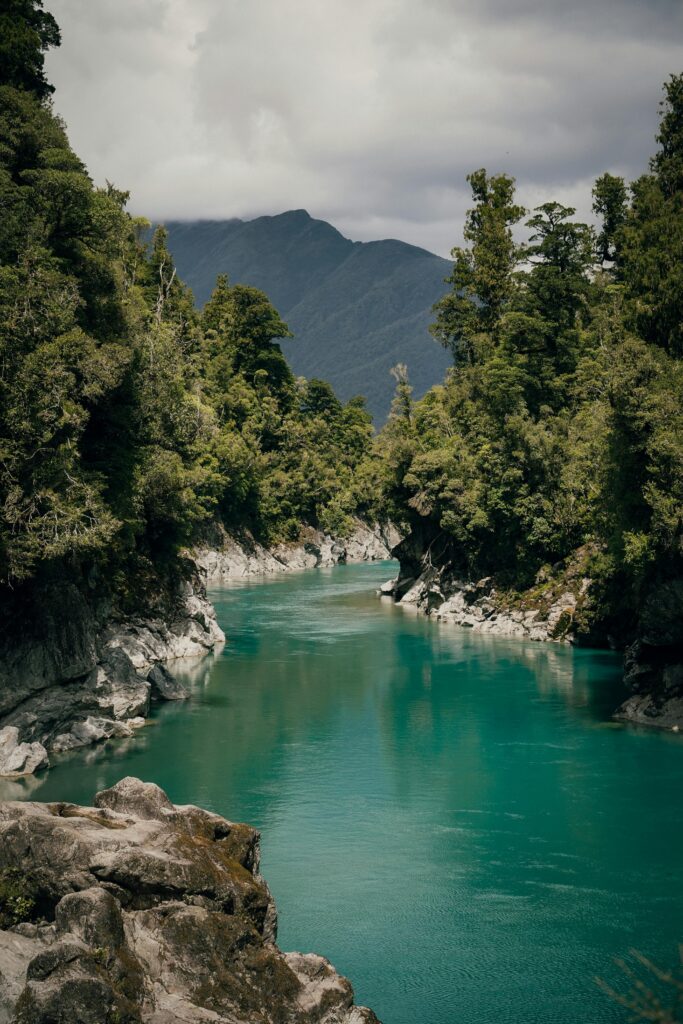
Afternoon: A short 30-minute drive away is Hokitika Gorge, an incredible spot with unnaturally turquoise water. Once there, go for a hike and marvel at the milky blue-green waters of the Hokitika River. You won’t believe your eyes, but remember, swimming isn’t allowed because the freezing glacier-fed water is sacred in Māori culture.
Where to Stay: You can’t go wrong with Lake Mahinapua DOC Campground (10 km south of Hoki). It offers non-powered, tranquil lakeside sites. If you’re self-contained and want to stay in town, there’s a designated freedom camping area by the beach.
✨ Local Tip: After dark, go to the Hokitika Glow Worm Dell. It’s free, and a short walk leads you into a bushy nook where thousands of tiny glowworms light up the banks like fairy lights. Magical!
Day 3: Hokitika to Cape Foulwind (via Punakaiki) – 140 km, ~2 hours
Morning: Hop into your rugged campervan and drive north on SH6.
After about 30 minutes, you’ll be in Greymouth. This is the perfect place to refuel, buy some groceries, and grab a famous West Coast meat pie. You can also visit Monteith’s Brewery for a cheeky brewery tour and tasting.
Midday: The drive from Greymouth to Punakaiki is known as the Great Coast Road, rated one of the most scenic coastal drives in the world. It’s only 45 minutes, hugging cliffs and wild beaches, so take your time and soak in the views.
Once you reach Punakaiki, head straight to the Pancake Rocks and Blowholes. Take a short loop walk around these bizarre, 30-million-year-old limestone formations that look like giant stacks of pancakes. The best time to view is high tide, when seawater whooshes into caverns and blasts upward through blowholes. Check the tide tables and plan your morning in Greymouth accordingly.
Grab a coffee or a fluffy at the café across the road afterwards!
Afternoon: Continue north to Cape Foulwind and take the coastal walkway (3.4km return) to the seal colony viewpoint. In shoulder season, you usually have the viewing platform to yourself to watch fur seals frolicking on the rocks below.
If you’re keen on surfing, Tauranga Bay is the perfect place for beginners. Grab a board, wetsuit, and lessons from West Coast Surf.
Where to Stay: If you’re in a self-contained van, freedom camp at the Tauranga Bay car park or Kawatiri Beach. Remember to check the current rules on your apps or at the Westport visitor centre. If not, drive to Westport and stay at Charlie’s Place campsite for all the facilities you might need.
🌅Local Tip: Don’t miss the sunset! Grab a place at Cape Foulwind and be amazed by the sun sinking into the Tasman Sea.
Day 4: Westport to Motueka/Kaiteriteri – 250 km, ~3-4 hours
Morning: Say goodbye to Westport and head east on SH6, winding through rainforests and wild river valleys.
It’s worth pulling over at Buller Gorge Swingbridge if you’re up for a short thrill on New Zealand’s longest swing bridge.
Midday: Stop at St Arnaud, nestled on the edge of Lake Rotoiti in Nelson Lakes National Park. It’s perfect for a picnic and a peaceful walk along the Bellbird or Honeydew Tracks.
Afternoon: Continue on to Motueka via SH6 and SH60. If time allows, go to Riwaka Resurgence, a magical freshwater spring just off the highway — it’s short, free, and a local favourite. Finally, make your way to Kaiteriteri Beach in time for sunset. The orange-gold sand and glowing skies over Tasman Bay are an epic way to end the day.
Where to Stay: Motueka has several holiday parks and some freedom camping spots for self-contained campervans – double-check the Rankers Camping NZ and CamperMate apps before parking. For beach vibes, Kaiteriteri has a large campground right by the sand with facilities and power.
🛥️ Local Tip: You’ll visit Abel Tasman National Park tomorrow, so check out the beaches tonight and book a one-way water taxi early to make sure you get a place.
Days 5–7: Abel Tasman, Golden Bay, and Nelson
Whether you came via the Alps or the Coast, your journey now converges for the final three days in the Nelson–Tasman region.
Get ready for golden beaches, national parks, wine-tasting, and chilled-out coastal towns to finish your trip!
Day 5: Motueka/Kaiteriteri to Abel Tasman National Park – 15 km, ~20 mins
All Day: Start by driving to Mārahau, the southern gateway village of Abel Tasman. It’s super close.
Next, park your van at the long-term car park by the waterfront (small fee, but secure). You won’t be needing it today as Abel Tasman National Park has no road access; you’ll be exploring on foot, kayak, or water taxi.
From Mārahau, catch the water taxi you booked last night. Several companies (like AquaTaxi and Sea Shuttles) operate services that drop hikers and kayakers at various bays.
We suggest a morning water taxi to Anchorage Bay, then walking back (3-4 hours) in the late afternoon. This way, you save money, combine chilling on beaches with hiking, and enjoy a scenic boat ride.
Alternatively, you can do it for free with an out-and-back hike from Mārahau to somewhere like Coquille Bay (2 hours round trip). Or if you’re sporty, rent a kayak and explore at your own pace.
If you took the boat to Anchorage Bay and are walking back to your Escape Rentals campervan, you should visit:
- Torrent Bay Viewpoint for stunning views over the idyllic bay
- Cleopatra’s Pool for a natural rock pool with a mossy rock waterslide
- Apple Tree Bay, a sandy cove full of curious, cheeky Weka
Where to Stay: There’s a self-contained camping area just outside Marahau at Porter’s Beach. It’s not well signposted, so ask a local or check CamperMate before bunking down. If you prefer facilities, Old Macdonald’s Holiday Park offers van sites, hot showers, farm animals roaming about, and a chill vibe.
🍔 Local Tip: Grab food from the Fat Tui burger shack.
Day 6: Mārahau to Tākaka and Golden Bay – 60 km, ~1 hour
Morning: Take SH60 to venture over the Takaka Hill. This road is a famous zigzag, and the views back toward Abel Tasman and Nelson Bay are phenomenal, especially from Hawkes Lookout.
Once you arrive in Tākaka – the only town in Golden Bay – explore this funky town and its colourful murals, organic cafes, and laid-back people.
Park up on the main street and have a wander. Check out the local galleries, the iconic Wholemeal Café housed in an old theatre, and head to the supermarket and petrol station.
Afternoon: Just 6 km from Takaka is Te Waikoropupū Springs, a must-see natural wonder. These are some of the clearest freshwater springs in the world, with visibility up to 63 metres!
The unbelievably transparent water has an ethereal blue tint and aquatic plants waving in the current. Important: The springs are tapu (sacred and forbidden) to Māori and off-limits for swimming or touching, so please respect the local culture.
Next, hop back into your reliable campervan and drive north for about 50 minutes. You’ll reach Farewell Spit, the long sand spit arcing out from the South Island’s northern tip, via Collingwood and Puponga. Check out Fossil Point at the Spit’s base and the dramatic cliffs at Cape Farewell – the northernmost point of the South Island.
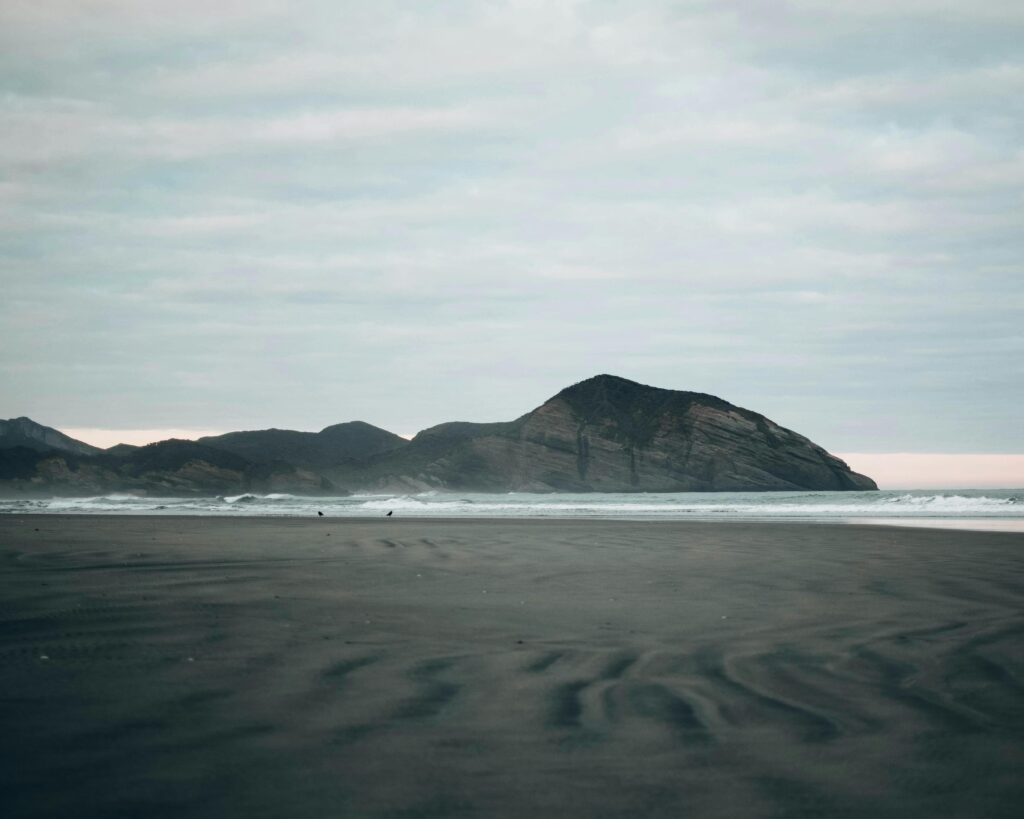
Last but not least, the gem of Golden Bay: Wharariki Beach. Continue past Puponga until you get to Wharariki carpark. From here, an easy 20-minute track over farmland leads you to the beach. You’ll see massive dunes and a wild beach facing the Archway Islands, spectacular rock islets with arch tunnels.
Where to stay: There’s a free camping site for self-contained vans at Motupipi Car Park in Takaka – a basic parking lot. Otherwise, stop at the Hack’n Stay in Puramahoi, where this farm site offers cheap powered sites.
🦞Local Tip: Go to The Mussel Inn in Onekaka. This iconic brew pub has live music, great food (steamed mussels, anyone?), and its own beers and ciders.
Day 7: Tākaka to Nelson – 100 km, ~2 hours
Morning: Grab a coffee and a bagel before getting into your Escape Rentals van and driving up Takaka Hill again.
Once over the hill, keep going until you reach Mapua. Stop for a stroll at the Wharf, a trendy spot with galleries and stores.
Midday/Afternoon: Arrive in Nelson City and spend the day basking in its sunshine, arts scene, and quality of life.
Park the van centrally. Montgomery Square car park is a good spot.
If it’s Saturday, lucky you, go to the Nelson Market! It’s famous for local crafts, food stalls, produce, and buskers. Great place to pick up a unique souvenir or try local goodies like manuka honey, artisan cheeses, or a whitebait fritter.
Next, explore the city on foot. Walk up the church steps to the Nelson Cathedral for a view over the town. Check out some art galleries – The Suter Art Gallery (free entry) is a lovely regional gallery with a café by the duck pond in Queens Gardens.
Finally, check out a few craft breweries (like Sprig & Fern) before grabbing a dinner of fish and chips on Tahunanui Beach, watching the sunset over the water.
Where to stay: Camp at Cable Bay Park for coastal freedom camping north of Nelson. Or stay central and prepare for tomorrow at the Tahuna Beach Holiday Park, a well-known site with many facilities.
📍Local Tip: Do the short Centre of New Zealand walk (about 20–30 minutes uphill) to the symbolic central point of NZ. The view from the top is worth the sweat!
Practical Tips for Campervan Travel in New Zealand
Driving & Road Tips
You’ll find a handbook and personal guidance for driving on NZ roads in your Escape Rentals campervan, but remember these tips to stay safe:
- Drive on the left. So always stay on the left, and if it’s your first time, repeat “the driver stays in the middle of the road”.
- Respect the speed and alcohol limits. Most highways are 100km/h, but plan for slower travel (~80km/h) on winding mountain and coastal roads..
- Watch out for one-lane bridges. They’re common in rural areas, and if you see a red arrow, it means you must yield to oncoming cars.
- Beware of crossing animals. Wildlife and livestock can surprise you on roads, especially at dawn/dusk.
- Say thanks, mate. It’s common courtesy to thank drivers who let you merge or give way – a little wave will do.
- Check the weather regularly. Download the MetService app and make sure conditions are okay before mountain passes.
- Don’t get fooled by short distances. Distances in NZ can be deceiving, so always allow for extra time and avoid driving when tired or after dark.
Freedom Camping & Campsites Information
If you hire a self-contained campervan (one with a toilet), you can enjoy the privilege of freedom camping, provided you respect the rules and look after nature.
- Self-contained vehicles only. Your vehicle needs self-contained certification, otherwise, rangers can fine you $400+ for non-compliance.
- Do not camp wherever you want. Respect the locals and the whenua (land) and stick to approved areas and DOC campsites.
- Download apps before you travel. Rankers Camping NZ and CamperMate are essential for finding the best legal spots.
- Try DOC sites. They are basic and budget-friendly (some are even free), and they’re often in the most beautiful locations. Book a Campsite Pass to save!
- Plan a power-up schedule. Hit a powered campsite every 2-3 days to recharge your van’s battery.
- Travel in shoulder or off-season. There’s far more camping availability and flexibility than in peak summer months!
Budget-Friendly Tips
- Visit in shoulder season. That is March-April or October-November. The weather’s good, rates are lower, and there are fewer tourists.
- Make the most of free activities. Most hiking tracks, beaches, and viewpoints are completely free. And so are many museums.
- Plan your fuel stops. Fill up in larger towns (Christchurch, Greymouth, Westport, Nelson) where prices are cheaper.
- Go to PAK’nSAVE grocery stores. They’re NZ’s cheapest supermarket chain (and you get fuel discounts at their associated petrol stations, too!).
- Cook your meals. You’ll become a travelling chef in no time with your van’s kitchen!
- Drink tap water. It is usually safe, unless sign-posted otherwise, so refill your bottles instead of buying water.
Kiwi Etiquette
- Say “Kia ora”. It means “be healthy” in Māori, but it’s used as an equivalent of “hello”, “goodbye”, and “cheers”.
- Respect private property. If a beach or farmland walking track has a gate, always close it behind you.
- Learn about the indigenous culture. Spend some time understanding the Māori culture and its significance in the areas you visit.
- Take your rubbish with you. And even pick up rubbish someone else left. Leaving places better than you found them is the Kiwi thing to do.
- Be polite and friendly. Kiwis are friendly folks, so don’t hesitate to smile and mingle with the locals. Ask for directions or recommendations to find gems.
Escape Rental Perks
- A van that turns heads. Travel in style with an artistic camper that’s easy to spot and great for photos.
- The van comes with plenty of accessories. Bedding, cooking gear, a solar shower, and a few camp chairs; you got it!
- We believe in transparent pricing. No hidden fees. No charges for additional drivers. No surprises. We make it easy to stick to a budget.
- We offer three levels of insurance and 24/7 roadside assistance. Feel confident to venture off the beaten path and sealed roads.
Where Next? Continue the Adventure or Head Home
After you finish this 7-day South Island loop, you have some options:
1. Keep exploring the South Island. Check out our other South Island campervan road trip routes for:
- Christchurch → Queenstown
- Christchurch → Dunedin
- Christchurch → Picton
- Christchurch → Franz Josef
2. Head to the North Island. Take the Bluebridge ferry to Wellington (during the days for views of the Marlborough Sounds) and continue your NZ adventure on the North Island. Your Escape campervan can come along for the ride – just drop it off in Auckland.
3. Return to the Escape Rentals Christchurch depot. If the trip is over ( 🙁), then drive back to Christchurch to drop the van and fly home.
If you have an extra day, take the scenic route and plan some final stops! Drive back via the Kaikōura Coast – go by Blenheim and the Awatere Valley for a Marlborough wine tasting (world-famous Sauvignon Blanc? 🥂) and then stop by the rugged Kaikōura to see sperm whales and fur seals.
Whatever road you go down, a reliable, artistic campervan from Escape Rentals Christchurch is the perfect way to experience the South Island’s jaw-dropping beauty, at your own pace and without breaking the bank.
👉Get a quote for your dates or call our friendly team at 0800 21 61 71 👈
Have an amazing journey, and “Ka kite anō” (see you again)!
P.S. If you’re planning your NZ holiday budget, don’t miss our NZ campervan hire cost guide.